
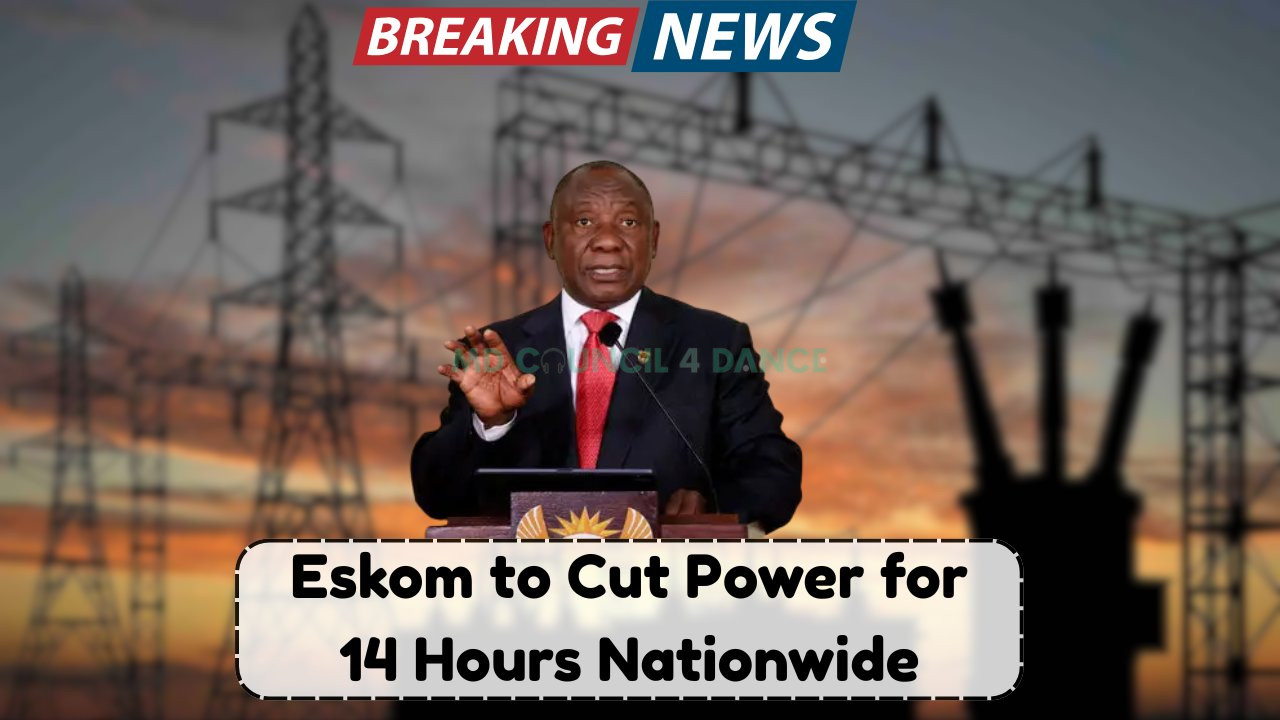
14-Hour Power Cuts in South Africa: South Africans are being urged to prepare for significant disruptions in June 2025, as Eskom has announced a series of 14-hour power cuts. These extended outages are planned as part of the utility’s strategy to manage the electricity grid’s stability amidst ongoing challenges.
Understanding the Eskom Schedule
Eskom’s latest schedule reveals the detailed plan for power cuts across the nation. This initiative is aimed at preventing a total grid collapse due to the increasing demand and limited supply. The utility company has outlined specific time slots for these outages to ensure that citizens can plan their activities around the scheduled downtimes.
Key Points to Note:
- Power cuts will last up to 14 hours per day in some areas.
- The schedule is designed to rotate outages across regions.
- Residential and commercial areas are both affected.
- Load shedding is implemented to protect the grid.
- Essential services will have priority access to power.
- Residents are encouraged to use electricity sparingly.
- Updates will be provided as the situation develops.
It is crucial for residents to stay informed about the specific times their areas will be affected by the power cuts to minimize disruptions to daily life.
Impact on Daily Life
Extended power cuts are expected to have a significant impact on households and businesses. The lack of electricity for prolonged periods can disrupt everything from cooking and heating to industrial operations.
How to Cope with the Outages
| Solution | Benefits | Considerations | Cost | Availability | Installation | Maintenance |
|---|---|---|---|---|---|---|
| Generators | Reliable backup power | Noise, fuel cost | High | Widely available | Professional required | Regular servicing |
| Inverters | Silent operation | Limited power supply | Medium | Widely available | DIY possible | Minimal |
| Solar Panels | Eco-friendly | Weather dependent | High | Available but costly | Professional required | Low |
| Battery Systems | Store solar energy | High initial cost | High | Available | Professional required | Low |
| Gas Appliances | Alternative cooking/heating | Fuel cost | Low | Widely available | DIY possible | Minimal |
| LED Lighting | Energy efficient | Limited hours | Low | Widely available | DIY possible | Minimal |
| Water Storage | Ensures supply | Space required | Medium | Widely available | DIY possible | Minimal |
| Insulation | Maintains temperature | Initial cost | Medium | Widely available | Professional required | Low |
Community Response to Power Cuts
Communities across South Africa are finding innovative ways to cope with these challenges. From community-run solar initiatives to local businesses providing charging stations, the spirit of resilience is evident.
- Community solar projects are gaining popularity.
- Local businesses offer shared resources like generators.
- Online platforms facilitate information sharing.
- Neighborhood watch groups help during outages.
- Public spaces provide charging facilities.
- Local councils are engaging in energy-saving campaigns.
- Educational workshops on energy conservation are being held.
Government’s Role and Support
- Providing subsidies for solar installations.
- Implementing energy efficiency programs.
- Offering grants for innovative energy solutions.
- Ensuring critical infrastructure is powered.
- Coordinating with local authorities for effective communication.
- Investing in renewable energy projects.
Future Prospects for South Africa’s Energy
The current situation highlights the urgent need for long-term solutions to South Africa’s energy crisis. Efforts are being made to diversify energy sources and improve efficiency.
Potential Developments
Departmental Contact Details
For further information and assistance, South Africans are encouraged to reach out to the following contacts:
Eskom Customer Service: 0860 037 566
Department of Mineral Resources and Energy: 012 406 8000
National Energy Regulator of South Africa (NERSA): 012 401 4600
City Power Johannesburg: 0860 562 874
EThekwini Municipality Electricity Call Centre: 080 131 3111
Frequently Asked Questions
What are the main reasons for the power cuts?

- Eskom cites maintenance issues and insufficient generation capacity as the main reasons for the extended power cuts.
How will the power cuts affect businesses?
- Businesses may face operational disruptions, increased costs for backup power, and potential losses in productivity.
Can residents expect any compensation for the power cuts?
- Currently, there are no compensation plans in place for residents affected by the power cuts.
What steps can individuals take to minimize the impact?
- Individuals can invest in backup power solutions, reduce energy usage, and stay informed about the power cut schedule.
Is there any government support available?
- The government is offering some subsidies for renewable energy installations and initiatives to promote energy efficiency.
Community Initiatives and Support
As South Africa braces for these power cuts, community-driven initiatives are emerging as a vital source of support and innovation. Collaborative efforts across neighborhoods are helping to ease the burden of these challenges.
- Shared generator facilities in community centers.
- Information sharing through local forums and social media.
- Volunteer programs to assist vulnerable populations.
- Workshops on energy-saving techniques.
- Neighborhood solar energy projects.
Long-term Energy Solutions
In light of the ongoing power cuts, South Africa is looking towards sustainable, long-term solutions to address its energy challenges. These include expanding renewable energy sources, enhancing energy storage, and improving grid infrastructure.
- Investments in wind and solar farms.
- Development of large-scale battery storage systems.
- Upgrades to smart grid technology for better management.
- Increased funding for energy efficiency research.
- Partnerships with international energy experts.
Innovative Energy Solutions
Solar Energy: As an abundant resource in South Africa, solar energy is becoming increasingly popular among households and businesses seeking reliable power solutions.
Wind Farms: Coastal regions are particularly suited for wind energy, contributing to the diversification of the national energy mix.
Bioenergy: Utilizing organic waste to generate electricity offers a sustainable option for reducing landfill waste and generating power.
Hydropower: Although limited, existing hydroelectric plants play a role in providing renewable energy to the grid.
Energy Efficiency: Promoting energy-saving practices and technologies can significantly reduce consumption and alleviate pressure on the grid.
