
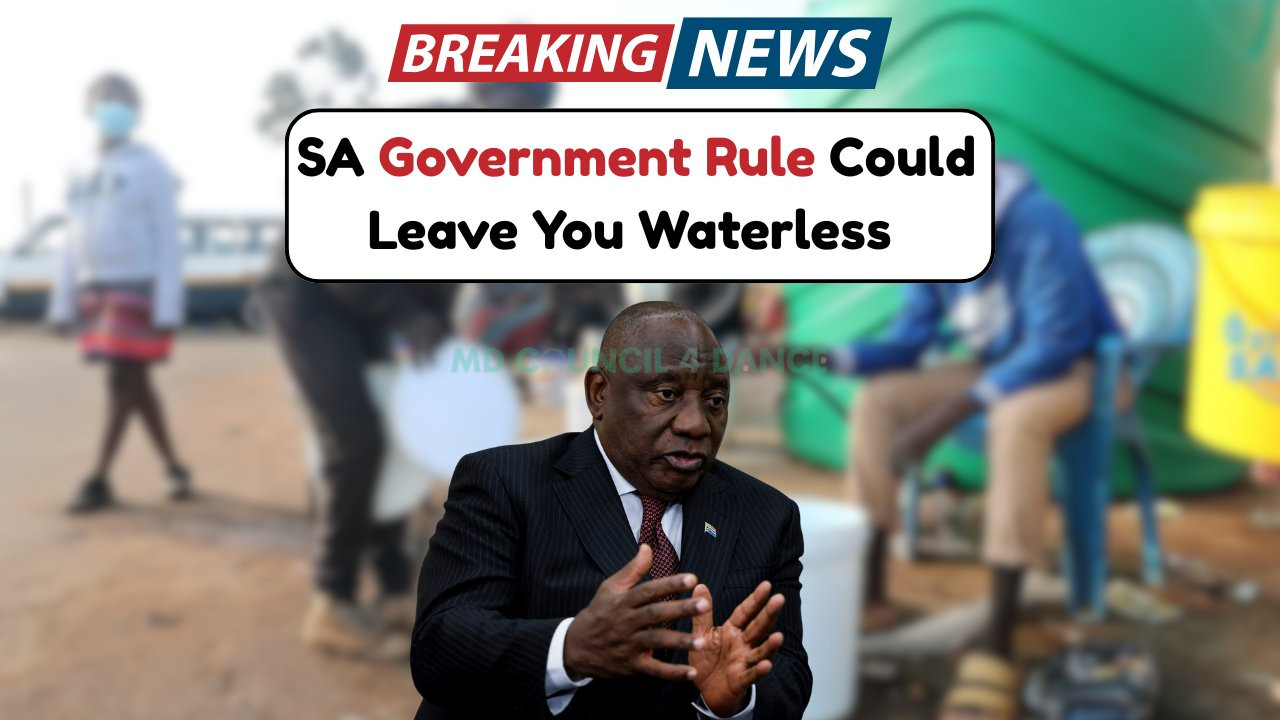
New Government Rule on Water Supply: South Africa is on the brink of a significant regulatory change that could impact thousands of residents across the country. The government plans to implement a new water supply regulation that aims to address the ongoing challenges of water scarcity and infrastructure management.
Water Supply Regulation: Implications for Residents
The proposed regulation is a response to the increasing water scarcity issues that have plagued South Africa for years. While the regulation intends to promote sustainable water use, it has raised concerns among citizens about potential disruptions in their water supply.
- Residents may experience scheduled water cuts to manage supply efficiently.
- New tariffs could be introduced to discourage excessive water use.
- Water meters might be installed in households to monitor consumption.
- Strict penalties are expected for non-compliance with water usage limits.
- Community water management programs will be encouraged.
- Public awareness campaigns on water conservation are likely to be intensified.
These measures are aimed at ensuring long-term water sustainability but could result in short-term inconveniences for many households.
Government’s Approach to Water Conservation
The South African government has outlined its approach to managing the water crisis through a series of strategic initiatives. These include:

Strategic Initiatives
- Implementing advanced water purification technologies.
- Investing in infrastructure to reduce water loss.
- Promoting rainwater harvesting at the community level.
- Enhancing the efficiency of existing water supply systems.
- Collaborating with private sectors for innovative solutions.
These initiatives are part of a comprehensive plan to secure water resources for future generations while addressing the immediate needs of the population.
Challenges Facing Implementation
Despite the well-intentioned plans, the government faces several challenges in implementing the regulation effectively. These challenges include:
- Lack of funding for infrastructure upgrades.
- Resistance from communities fearing increased costs.
- Technical difficulties in installing water meters nationwide.
- Ensuring compliance with new water usage policies.
- Educating the public on the importance of water conservation.
- Managing potential legal challenges from affected parties.
- Balancing urban and rural water needs.
- Maintaining transparency in the regulation’s execution.
Addressing these challenges will be crucial for the regulation’s success and public acceptance.
Impact on Urban and Rural Areas
| Area | Expected Impact | Challenges | Opportunities |
|---|---|---|---|
| Urban | Water rationing | High demand | Technology integration |
| Rural | Improved access | Infrastructure deficits | Community programs |
| Coastal | Desalination projects | Environmental concerns | Sustainable development |
| Industrial | Usage monitoring | Cost implications | Efficiency gains |
| Agricultural | Irrigation control | Crop yield impact | Innovative practices |
| Residential | Water conservation | Compliance issues | Awareness growth |
| Tourism | Resource management | Visitor impact | Eco-friendly promotion |
Public Reaction and Concerns
The public response to the proposed regulation has been mixed, with some welcoming the initiative as a necessary step towards sustainability, while others worry about the implications on daily life.
| Concern | Perception | Government Response | Outcome | Feedback |
|---|---|---|---|---|
| Water cuts | Disruptive | Essential management | Short-term inconvenience | Mixed |
| New tariffs | Financial burden | Incentive for conservation | Potential savings | Opposition |
| Meter installation | Monitoring concern | Transparency assurance | Improved efficiency | Accepted |
| Penalties | Too strict | Need for compliance | Behavior change | Resistant |
| Community programs | Positive | Empowerment focus | Increased participation | Favorable |
| Public campaigns | Informative | Engagement drive | Heightened awareness | Supportive |
| Legal challenges | Potential delays | Commitment to dialogue | Negotiated solutions | Under review |
Key Takeaways for Residents
As the government prepares to implement these changes, residents should keep the following key points in mind:

- Stay informed about the regulation details.
- Participate in public forums.
- Conserve water whenever possible.
- Prepare for potential changes in water supply.
- Engage with local water management programs.
- Voice concerns to local representatives.
Departmental Contact Details
- Department of Water and Sanitation: (012) 336 7500
- Environmental Affairs: (012) 399 9000
- Local Municipalities: Contact your local office
- Public Queries: [email protected]
- Media Inquiries: [email protected]
- Feedback and Complaints: [email protected]
FAQs
What is the main goal of the new water regulation?
The primary aim is to promote sustainable water use and ensure long-term availability.
How will this regulation affect my daily life?
You may experience scheduled water cuts and new tariffs designed to encourage conservation.
Are there any benefits to this regulation?
Yes, it will lead to more efficient use of water resources and improved infrastructure.
What should I do if I have concerns about the regulation?
Contact your local municipality or the Department of Water and Sanitation.
How can I contribute to water conservation?
Participate in community programs and adopt water-saving practices at home.
How might the government's new rule impact thousands in terms of water supply?

It could potentially leave many without access to water.
